Page 3 of 3

Testing…

This track is embedded with the friendly permission by the creatives on wikiloops.com.

Enable Twenty Twenty-One dark mode by default

Enable dark mode on Appearance/Customize/Colors & Dark Mode/Dark Mode Support

To enable dark mode by default on Twenty Twenty-One theme, put this script inside the theme:

<script>
// turn on dark mode by default. 
if (localStorage.getItem("twentytwentyoneDarkMode") === null)      
    {
        localStorage.setItem("twentytwentyoneDarkMode", "yes");
    }
</script>

The easiest way to put Javascript on your site is by using (free) Insert Headers and Footers plugin.
Download and activate the plugin, paste above code in “Scripts in Header” section and you’re done.

Keep in mind that this script automatically sets the cookie which would normally be set only if user clicks on ‘dark mode’ button.

Windows time service settings

If you want to set local tme client to point to specific time servers (ex. 0.centos.pool.ntp.org, 1.centos.pool.ntp.org and 2.centos.pool.ntp.org), open command line and type:

w32tm /config /manualpeerlist:"0.centos.pool.ntp.org,1.centos.pool.ntp.org,2.centos.pool.ntp.org" /syncfromflags:manual /update

Query syntax is as follows:
w32tm /query [/computer:] {/source | /configuration | /peers | /status} [/verbose]

Don’t know how to display offset between two servers, but you can display offset between two servers and local computer and figure it out:

w32tm /monitor /computers:0.centos.pool.ntp.org,zg1.ntp.carnet.hr
0.centos.pool.ntp.org[162.159.200.1:123]:
    ICMP: 5ms delay
    NTP: +0.0048841s offset from local clock
        RefID: (unknown) [0x04087C0A]
        Stratum: 3
zg1.ntp.carnet.hr[161.53.123.5:123]:
    ICMP: 4ms delay
    NTP: +0.0071290s offset from local clock
        RefID: stratum.ntp.CARNet.hr [161.53.123.8]
        Stratum: 2

To display a chart of the offset between this computer and another computer:

w32tm /stripchart /computer:0.centos.pool.ntp.org /samples:4
Tracking 0.centos.pool.ntp.org [162.159.200.123:123].
Collecting 4 samples.
The current time is 11.3.2021. 9:33:48.
09:33:48, d:+00.0097740s o:+00.0048374s  [                           *                           ]
09:33:50, d:+00.0054590s o:+00.0067177s  [                           *                           ]
09:33:52, d:+00.0047548s o:+00.0063610s  [                           *                           ]
09:33:54, d:+00.0046417s o:+00.0063650s  [                           *                           ]

where d: is round trip delay and o: is offset.
To point time client to sync with domain controller:

w32tm /config /syncfromflags:domhier /update

Reference: Windows Time service tools and settings (Microsoft Docs)

Adding new multipath disks to ASM diskgroup

How to add new multipath disks to ASM diskgroup on RHEL7/CentOS7, Oracle 11.2
Install and start multipath tools:

yum install device-mapper-multipath
mpathconf --enable
systemctl enable multipathd
systemctl start multipathd

If the system does not see the newly attached FC disks, you need to rescan SCSI bus:

ls /sys/class/fc_host/
host1
host2

instruct the driver to rediscover above remote ports:

echo 1 >/sys/class/fc_host/host1/issue_lip
echo 1 >/sys/class/fc_host/host2/issue_lip

wait for some 10-15 seconds and then

echo - - - >/sys/class/scsi_host/host1/scan
echo - - - >/sys/class/scsi_host/host2/scan
systemctl reload multipathd

New disk should now be visible:

multipath -ll
---snip---
mpath18 (360060160085928001e0ec4e356a2e011) dm-12 DGC,RAID 10
[size=6.8T][features=1 queue_if_no_path][hwhandler=1 emc][rw]
\_ round-robin 0 [prio=2][active]
\_ 1:0:1:17 sdak 66:64 [active][ready]
\_ 2:0:0:17 sdbc 67:96 [active][ready]
\_ round-robin 0 [prio=0][enabled]
\_ 2:0:1:17 sdbu 68:128 [active][ready]
\_ 1:0:0:17 sds 65:32 [active][ready]
---snip---

To rename this newly created LUN mpath18 with wwid 360060160085928001e0ec4e356a2e011 to something more appropriate, e.g. DATA2, edit /etc/multipath.conf and add the following lines in multipaths section:

# 6.8T RAID10 DATA2
multipath {
wwid 360060160085928001e0ec4e356a2e011
alias data2
}

Reload multipath again and LUN should be visible under name data2:

service multipathd reload
multipath -l data2
data2 (360060160085928001e0ec4e356a2e011) dm-12 DGC,RAID 10
[size=6.8T][features=1 queue_if_no_path][hwhandler=1 emc][rw]
\_ round-robin 0 [prio=0][active]
\_ 1:0:1:17 sdak 66:64 [active][undef]
\_ 2:0:0:17 sdbc 67:96 [active][undef]
\_ round-robin 0 [prio=0][enabled]
\_ 2:0:1:17 sdbu 68:128 [active][undef]
\_ 1:0:0:17 sds 65:32 [active][undef]

ASM on Oracle database 11.2 supports disks up to 2TB so we need to create smaller partitions:

parted /dev/mapper/data2
(parted) mklabel gpt
(parted) mkpart primary 0 2000G
(parted) mkpart primary 2000G 4000G
(parted) mkpart primary 4000G 7516G
(parted) print
Model: Linux device-mapper (dm)
Disk /dev/mapper/data2: 7516GB
Sector size (logical/physical): 512B/512B
Partition Table: gpt
Number Start End Size File system Name Flags
1 17.4kB 2000GB 2000GB primary
2 2000GB 4000GB 2000GB primary
3 4000GB 6000GB 2000GB primary
4 6000GB 7516GB 1516GB primary
(parted) quit

reload multipath and these four new partitions are visible as

/dev/mapper/data2p1
/dev/mapper/data2p2
/dev/mapper/data2p3
/dev/mapper/data2p4

To let udev handle device ownership for ASM, edit /etc/udev/rules.d/90-oracle-permissions.rules and add lines

PROGRAM="/bin/chown oracle:dba /dev/mapper/data2p1"
PROGRAM="/bin/chown oracle:dba /dev/mapper/data2p2"
PROGRAM="/bin/chown oracle:dba /dev/mapper/data2p3"
PROGRAM="/bin/chown oracle:dba /dev/mapper/data2p4"

Execute start_udev to apply ownership change and now we’re ready to mark these disks as ASM disks:

start_udev
/etc/init.d/oracleasm createdisk DATA21 /dev/mapper/data2p1
Marking disk "DATA21" as an ASM disk: [ OK ]
/etc/init.d/oracleasm createdisk DATA22 /dev/mapper/data2p2
Marking disk "DATA22" as an ASM disk: [ OK ]
/etc/init.d/oracleasm createdisk DATA23 /dev/mapper/data2p3
Marking disk "DATA23" as an ASM disk: [ OK ]
/etc/init.d/oracleasm createdisk DATA24 /dev/mapper/data2p4
Marking disk "DATA24" as an ASM disk: [ OK ]

If thi is RAC configuration, let the other cluster nodes rescan disks:

/etc/init.d/oracleasm scandisks

Finally, add new ASM disks to existing disk group ‘datadg’:

alter diskgroup datadg add disk 'ORCL:DATA21' name DATA21;
alter diskgroup datadg add disk 'ORCL:DATA22' name DATA22;
alter diskgroup datadg add disk 'ORCL:DATA23' name DATA23;
alter diskgroup datadg add disk 'ORCL:DATA24' name DATA24;

As soon as you add new disk to diskgroup, automatic disk rebalance process will start. If you have very large database and/or undersized SGA on ASM instance, watch out for ORA-04031 (unable to allocate x bytes of shared memory) errors because rebalance process is quite hungry for shared pool on ASM instance.

Odissey

Tell me, O Muse, of that ingenious hero who travelled far and wide after he had sacked the famous town of Troy. Many cities did he visit, and many were the nations with whose manners and customs he was acquainted; moreover he suffered much by sea while trying to save his own life and bring his men safely home; but do what he might he could not save his men, for they perished through their own sheer folly in eating the cattle of the Sun-god Hyperion; so the god prevented them from ever reaching home. Tell me, too, about all these things, oh daughter of Jove, from whatsoever source you may know them.

So now all who escaped death in battle or by shipwreck had got safely home except Ulysses, and he, though he was longing to return to his wife and country, was detained by the goddess Calypso, who had got him into a large cave and wanted to marry him. But as years went by, there came a time when the gods settled that he should go back to Ithaca; even then, however, when he was among his own people, his troubles were not yet over; nevertheless all the gods had now begun to pity him except Neptune, who still persecuted him without ceasing and would not let him get home.

Excerpt No3

Achilles (in the first book of the Iliad), won by the persuasion of Minerva, resolves, though indignantly, to give up Briseis, and Patroclus is commanded to deliver her to the heralds of Agamemnon:

Ως φατο· Πατροκλος δε φιλω επεπεἰθεθ’ εταιρω· Εκ δ’ ἄγαγε κλισιης Βρισηιδα καλλιπαρηον, Δῶκε δ’ αγειν· τω δ’ αυτις ιτην παρα νηας Αχαιων· Ἡ δ’ αεκουσ’ ἁμα τοισι γυνὴ κιεν.

Another sample post

If it were possible accurately to define, or, perhaps more properly, to describe what is meant by a good Translation, it is evident that a considerable progress would be made towards establishing the Rules of the Art; for these Rules would flow naturally from that definition or description. But there is no subject of criticism where there has been so much difference of opinion. If the genius and character of all languages were the same, it would be an easy task to translate from one into another; nor would anything more be requisite on the part of the translator, than fidelity and attention. But as the genius and character of languages is confessedly very different, it has hence become a common opinion, that it is the duty of a translator to attend only to the sense and spirit of his original, to make himself perfectly master of his author’s ideas, and to communicate them in those expressions which he judges to be best suited to convey them. It has, on the other hand, been maintained, that, in order to constitute a perfect translation, it is not only[8] requisite that the ideas and sentiments of the original author should be conveyed, but likewise his style and manner of writing, which, it is supposed, cannot be done without a strict attention to the arrangement of his sentences, and even to their order and construction.[6] According to the former idea of translation, it is allowable to improve and to embellish; according to the latter, it is necessary to preserve even blemishes and defects; and to these must, likewise be superadded the harshness that must attend every copy in which the artist scrupulously studies to imitate the minutest lines or traces of his original.

As these two opinions form opposite extremes, it is not improbable that the point of perfection should be found between the two. I would therefore describe a good translation to be, That, in which the merit of the original work is so completely transfused into another language, as to be as distinctly apprehended, and as strongly[9] felt, by a native of the country to which that language belongs, as it is by those who speak the language of the original work.

Now, supposing this description to be a just one, which I think it is, let us examine what are the laws of translation which may be deduced from it.

It will follow,

I. That the Translation should give a complete transcript of the ideas of the original work.

II. That the style and manner of writing should be of the same character with that of the original.

III. That the Translation should have all the ease of original composition.

Under each of these general laws of translation, are comprehended a variety of subordinate precepts, which I shall notice in their order, and which, as well as the general laws, I shall endeavour to prove, and to illustrate by examples.

Sample post

Lorem ipsum dolor sit amet, consectetur adipiscing elit. Donec accumsan, metus at mollis venenatis, tortor dui dignissim neque, sed sollicitudin odio libero vel lacus. Nullam imperdiet arcu purus, efficitur vehicula urna gravida sit amet. Proin rhoncus tempus sem, id facilisis sem consequat id. Curabitur bibendum vulputate magna ac posuere. Duis tristique eros vitae ante ullamcorper, sed congue leo iaculis. Etiam sollicitudin nunc a elit consequat, vel imperdiet nibh faucibus. Ut eu blandit erat, vel vestibulum elit. Sed hendrerit metus a sollicitudin facilisis. Proin vel neque sollicitudin, efficitur diam ut, interdum lacus. Vivamus sed aliquet sem, eget rutrum diam. Pellentesque risus elit, rhoncus in ornare vitae, accumsan ut sem. Etiam quis convallis enim, id iaculis risus. Praesent euismod a eros at ultrices. Integer aliquet ipsum vel nisl tincidunt suscipit.

Proin vitae consectetur ligula, eget consectetur nunc. Phasellus consectetur ex quis bibendum aliquet. Nullam eu mauris in ligula hendrerit tincidunt. Quisque fringilla aliquet mi, sit amet bibendum purus rutrum nec. Ut id luctus enim. Suspendisse consequat venenatis nisl. Mauris sagittis nisi in fermentum dictum.

Donec sit amet ligula iaculis, vehicula mauris at, pellentesque nisl. Suspendisse potenti. Sed a convallis lectus. Aenean et risus ante. Nam sit amet ipsum vitae lectus dapibus placerat. Cras sed dictum quam, quis hendrerit augue. Phasellus quis egestas purus. Integer ut lorem quis neque euismod sagittis at in dui. Sed faucibus tellus et est commodo, fermentum mollis diam finibus. Suspendisse volutpat, lectus in viverra ultrices, velit nisi pellentesque leo, vitae facilisis ipsum quam a tellus. Quisque cursus libero et lacus tristique, ut aliquet velit commodo.

Orci varius natoque penatibus et magnis dis parturient montes, nascetur ridiculus mus. Morbi et ante auctor, lacinia orci vitae, mattis dolor. Duis at purus vestibulum, sodales sapien at, consectetur augue. Cras nec enim blandit, aliquet nulla nec, porttitor sapien. Donec nisl metus, pellentesque in gravida vel, suscipit vitae elit. Quisque augue dui, porta id tortor eget, semper maximus metus. In a ligula enim. Sed condimentum pretium pulvinar. Fusce vulputate egestas arcu, non congue magna malesuada non. Nulla nec egestas turpis, vitae volutpat ante. Nunc vitae magna nulla. Pellentesque elementum tellus dolor, in iaculis risus tincidunt at. Sed vitae risus vitae nunc placerat ornare. Nullam efficitur leo vitae tellus sodales euismod. Proin volutpat leo enim, venenatis condimentum metus mollis auctor. Fusce laoreet, odio nec eleifend pharetra, tortor eros ultricies neque, nec euismod ipsum massa sed sapien.

Lorem ipsum dolor sit amet, consectetur adipiscing elit. Vestibulum a ornare odio, at ultrices quam. Aliquam erat volutpat. Cras pretium turpis urna, in scelerisque felis ornare vel. Vivamus fringilla blandit odio, in porta ex semper nec. Vestibulum ex nunc, tristique vel posuere eget, venenatis eget augue. Etiam bibendum ipsum vel nisi feugiat, ac porttitor ante gravida. Proin fermentum lorem arcu, ac malesuada sem eleifend et. Class aptent taciti sociosqu ad litora torquent per conubia nostra, per inceptos himenaeos. Mauris mattis nec tortor in ornare. Nulla mattis mauris quis ipsum auctor, quis rutrum ante lobortis. Integer dolor magna, congue in efficitur sed, dictum nec enim. Vivamus et malesuada augue, sed commodo nisi. Vivamus enim diam, posuere a accumsan et, pulvinar eu ex. Cras malesuada laoreet gravida. Nullam fringilla nisi et justo euismod fermentum.

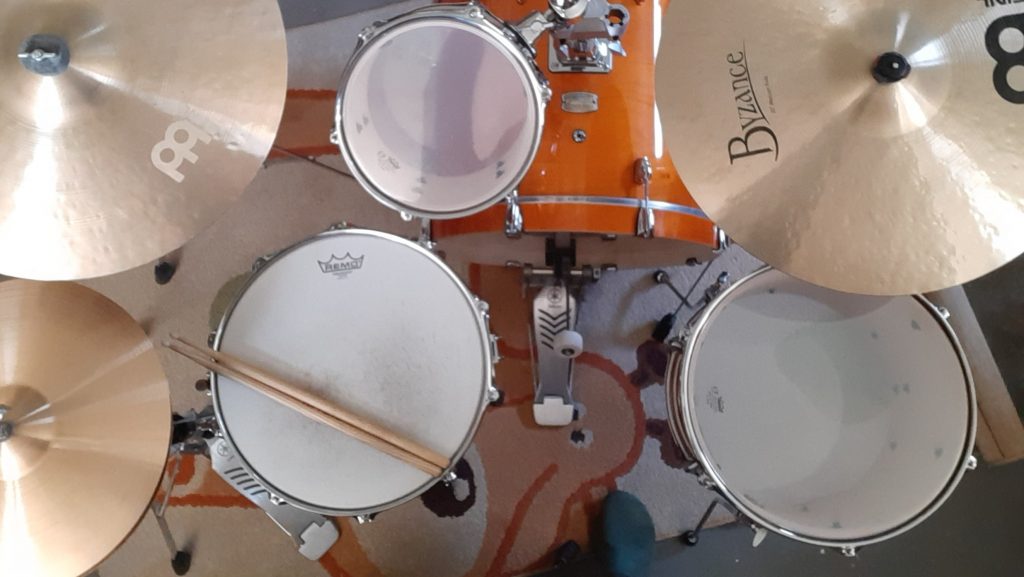
random picture
Some random picture

Preformatted example:

pre {
     border-left: 2px solid #749dbc;
     padding-left: 1em;
     }

Newer posts »

© 2026 some random stuff

Theme by Anders NorenUp ↑